
















By Liberty Dispatch Staff
Facts First. Freedom Always.
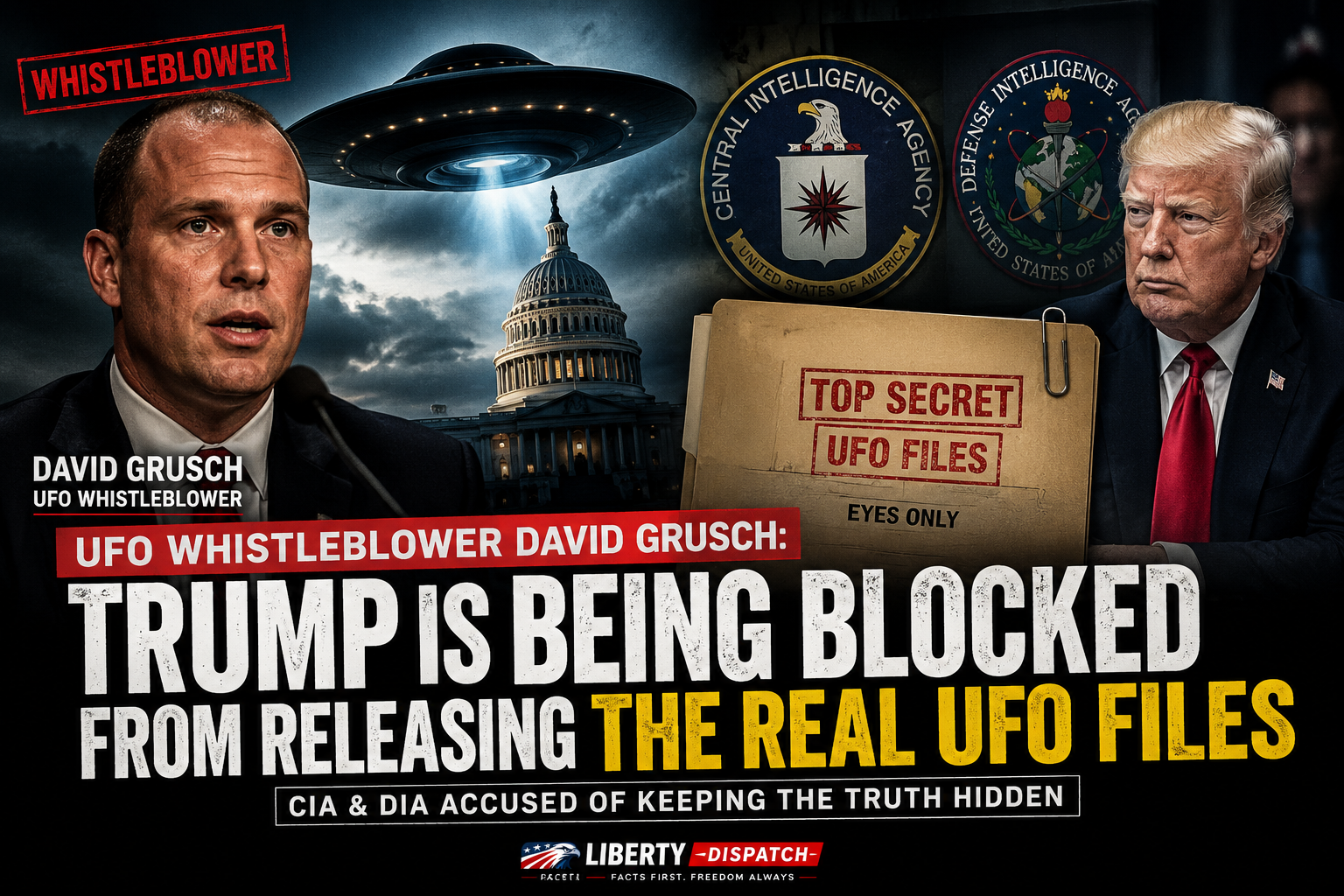
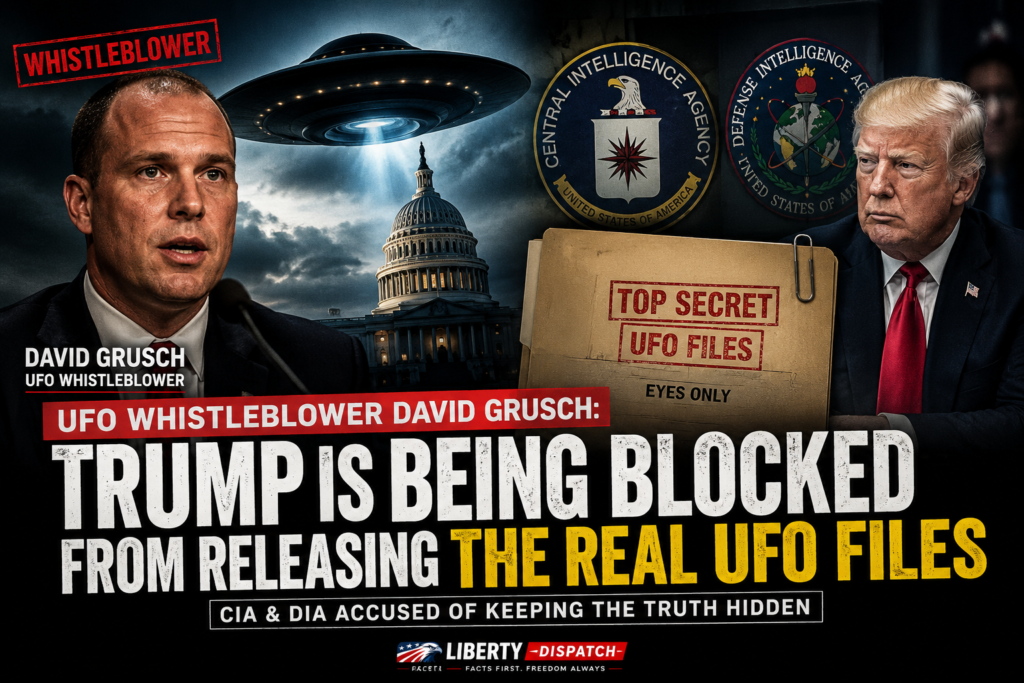
A renewed wave of speculation is sweeping across political and defense circles after whistleblower David Grusch suggested that critical information about unidentified aerial phenomena (UAPs) may still be withheld from the public—and potentially even from top political leadership.
The claims have sparked intense debate online, with some pointing to former President Donald Trump and questioning whether efforts to declassify sensitive materials have faced internal resistance.
What Was Actually Said
Grusch, who previously testified about alleged secretive government programs related to UAPs, has argued that certain information is tightly controlled within segments of the intelligence community.
However, there is no confirmed evidence that the Central Intelligence Agency or the Defense Intelligence Agency are actively blocking any president from releasing files.
The Bigger Question: Who Controls Disclosure?
The issue raises broader concerns about how classified information is handled in Washington. While presidents have significant declassification authority, intelligence agencies operate within complex legal and national security frameworks.
This has led some observers to question:
- How much do elected officials truly know?
- Are there limits to what can be disclosed publicly?
- And who ultimately decides?
Public Interest in UFO Transparency
Interest in UFOs—now more commonly referred to as UAPs—has surged in recent years, especially after official Pentagon reports acknowledged unexplained aerial encounters.
Still, many claims circulating online go far beyond what has been publicly verified.
Bottom Line
While whistleblower statements continue to fuel curiosity and debate, there is currently no confirmed proof that any U.S. president is being blocked from releasing “real UFO files.”
As always, separating fact from speculation remains critical.